On this page
About
Training
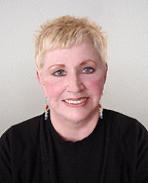
Suzanne Graupner Pike studied psychology and sociology at the University of Evansville (B.A., 1969), clinical psychology at Ball State University (M.A., 1971) and counseling psychology at Temple University, where she completed her Ph.D. in 1990 with a dissertation on treatment completion in an outpatient program for people with polysubstance problems.
Hospitals, prisons and addiction programs
She began as a staff psychologist at Central State Hospital in Indianapolis in 1970 and went on to psychology posts in Philadelphia hospitals and in the New Jersey Department of Corrections. From 1981 to 1986 she directed an outpatient substance abuse treatment center in Bowie, Maryland, and in 1987 and 1988 she was clinical director of outpatient substance abuse services for the Fairfax-Falls Church Community Services Board in Virginia.
Turning to gambling
In Annapolis, Maryland, in the early 1990s she designed intensive outpatient programs for chemical and food addictions and also treated pathological gambling. From 1994 to 1998 she was in private practice in Pittsburgh, working with addictions and eating disorders. She was licensed as a psychologist in Pennsylvania in 1981 and in Maryland in 1991.
San Diego
She moved her practice to San Diego in 1998 and was licensed as a psychologist in California in 1999. In 2003 she founded the San Diego Center for Pathological Gambling, a gambling-specific outpatient program for problem gamblers and their families, which over the years worked from Vista, Poway and Escondido in San Diego County. In 2002 she became a non-salaried clinical instructor in the Department of Psychiatry at the UCSD School of Medicine.
It just tears the family apart.
Suzanne Graupner Pike to the San Diego Union-Tribune, 2006
Courts
In 2005 the San Diego and Riverside County courts, the federal court for the Southern District of California and the federal courts for the Southern and Northern Districts of Iowa qualified her as an expert witness on pathological gambling. She has testified in both civil and criminal cases.
Treatment online
In July 2008 she opened an online chat-room service for people who lived too far from a specialist or felt too ashamed to seek help in person. She was frank with the San Diego Union-Tribune that online sessions are not ideal: she cannot see a patient's face and body language, so she has to ask more questions to gauge how they feel. Telephone and Skype sessions followed, and by 2018 the center also treated internet, video and social media disorders.
In the press
- Problem gambling: Reaction slow to growing concern
San Diego Union-Tribune, 27 August 2006.
Quoted as a Vista psychologist specialising in problem gambling, on how little help was available to gamblers and their families.
- REGION: Gambling addicts can get online help
San Diego Union-Tribune, 9 September 2008.
On the online treatment program she started in 2008.
- Growing casino culture and online betting mean gambling addicts must face constant temptation
New York Daily News, 12 November 2009.
Quoted on why gambling stops being about the money.